Showing posts with label pantry item. Show all posts

Sunday, June 15, 2008

fermented things — no. 1 {beet rossl}

before refrigeration, food was mainly preserved in one of three ways: it was either salted, dried or fermented — the exception to this being those who lived in extreme northern climates who were able to keep items frozen. that method, however, was not as stable as the aforementioned. as refrigeration became commonplace, the need for some of these practices of food preservation decreased or become unnecessary. on the other hand, many of the foods we love can only be prepared by those methods — the most important being fermentation.

fermentation, the complex chemical conversion of carbohydrates involving temperature and microorganisms, can be either intentional or accidental (ummm, what's that growing in the jar in the back of the fridge??), turning sugars into acids. some cultures seem to have more forms of (everyday) fermented foods than others; the most obvious seen in both chinese and japanese cuisines. there is also the belief, by some, that fermented foods are good for us.

in jewish cuisine, one of the oldest and most ubiquitous forms of fermentation is done with vegetables. besides pickling cucumbers, east european jews, like the people in the countries in which they lived, also fermented beets which resulted in something called rossl. in eastern europe, this was always prepared in homes around the holiday of purim, exactly four weeks before passover. the resulting beet rossl, a dark red and sour mixture of beet and beet juice, was (and still is) used to make soups, in addition to other things.

after 4 weeks of fermenting, the beets and its juice is ready to make (passover) borshcht. this is the real {i.e. authentic} ingredient used in this soup; those who didn't have it just added either sour salt (citric acid crystals) or lemon juice. at the moment, i'm not posting a recipe here for borshcht (see here for something similar) — i'm just showing you the easy way to prepare this beet rossl which some people still make today. though not nearly as popular as it used to be in years gone by, people do really annually prepare it as they have for centuries to this day. it's really no work at all; the fermentation does it all for you!


beet rossl

after a few weeks of slow fermentation, the result is a tangy deep magenta liquid and its pickled pieces of beetroot. both the liquid and the beets are used in a variety of ways — mostly, however, for soups like borshcht, be it a vegetarian or meat version.

makes enough for 2 or 3 soups

ingredients:

3 very LARGE beets or 4 to 5 medium ones
9 c cold water (little more than 2L)

method:

*you need an impeccably clean glass jar and lid; make sure it's dry before using.

peel the beets under running water, taking care not to get splashed as the beet juices stain terribly. remove each end first.

cut the beets into chunks.


place them in a sterilized and immaculately clean glass jar (~ 10 c / 2L + size).


fill the jar with water to cover. i usually fill it up so i will have quite a bit of liquid. the water must, at the very least, cover the beets by 2 inches (5 cm).

let the beets sit on a kitchen counter with the lid just sitting on top of the jar. DO NOT SCREW IT ON as the gases that form have no place to go. within a day, there should be foam on the surface. this is the fermentation process in progress. if you have a very warm kitchen, it could start as early as 8 to 12 hours.

remove this and discard it. you MUST use a completely clean spoon to do this each and every time so as not to contaminate (the fermentation of) the beets.

keep removing anything that you see on the surface on a daily basis.

eventually the fermentation will stop after a few days.

usually within 2 weeks, the beets and the juice will start to taste noticeably more sour. this is what you are aiming for — it should be sour (in a good way!). you can taste it to see, it's perfectly safe.

the juice and the beets will be ready to use after four weeks.

to use the results:

for the beets:

grate the beets by hand or do it in a food processor. you can just dice them up too — follow the directions of your recipe. be careful, it stains!


for the beet juice:

this is used in place of some, or all, of the liquid content of the recipe. because the liquid is soured already, you won't need to add lemon juice ..... unless, of course, the results are not sour enough for your taste.

most likely, you will not find any recipes which call for "rossl" specifically unless you are using a very old cookbook or a family recipe. this shouldn't deter you from making this and using it!

enjoy!

Monday, June 02, 2008

demystifying semolina

i've been asked several times what semolina is and if the person asking has purchased the right product for some of the recipes posted to my blog. instead of explaining it each time, i am posting the answer here. this is the very 'short course' on semolina. here is the longer course on flour & wheat.

read and understand! :))

* * * * * * * * *

the first things you need to know are:

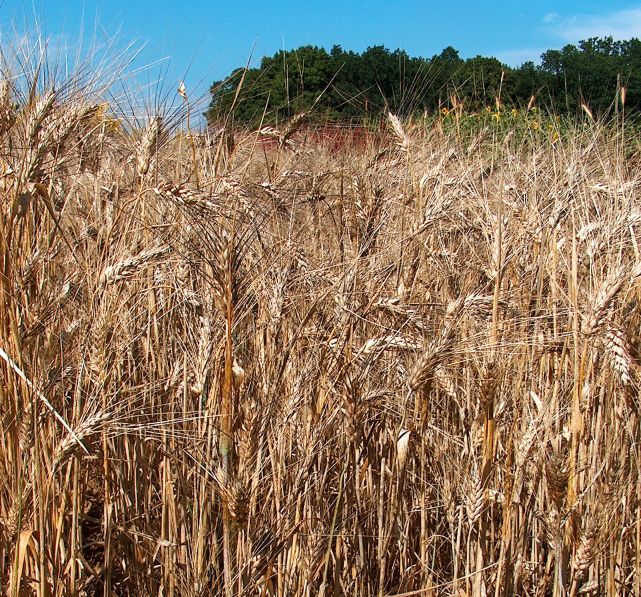
there are 3 types of wheat:

1 - hard wheat

*hard kernels -- high gluten -- used mostly for bread flour

2 - soft wheat

*soft kernels -- low gluten -- used mostly for pastry flour and "semolina"

3 - durum wheat

*very hard kernels -- very high gluten -- used mostly for pasta & couscous & "semolina"

each has a winter type and a spring type harvest.

without getting into all the minutiae, suffice it to say each wheat is a type of its own (with many varieties) giving different types of flours and wheat products. a variety of parts of the wheat kernel are used for the various flours and products made from it.

eg. whole wheat (meal) flour includes the bran coating; all purpose doesn't.

if you noticed, both soft wheat and durum wheat produce the much used product called semolina. this is where much of the confusion arises. the truth is..... it is confusing! more than once, i have seen it described in terrible terms in cookbooks. either the explanation was vague or just plain wrong. this coming from cookbook authors! hopefully, after reading this you won't be confused.

so, what is semolina anyway?! the easiest way to visualize/understand it is to first realize what it is and where it comes from. semolina is, in botanical terms, the endosperm. this means it is basically what eggwhite is to an egg (yolk). it is the albumin — starch portion — of the wheat grain. when processed, it is very small and granular.

there are 2 types of semolina depending upon which type of wheat is used:

[I] HARD WHEAT [Yellow] SEMOLINA (type: high gluten, high protein)

*comes from durum wheat ergo called 'durum semolina'
*can be bought in 2 types: granular + flour

-GRANULAR type is mostly used to make couscous along with durum flour.

-FLOUR type is mostly used for noodles, breads and baking (often called "pasta flour")

*is always YELLOW

-you should consider this type as the "bread flour type" of semolina as it is commonly used in making PASTA, COUSCOUS, (a type of pasta) & BREADS and BAKING due to its gluten percentage/ratio.

* * * * * * * * *

[II] SOFT WHEAT [White] SEMOLINA (type: high carb, low protein & low gluten)

*comes from different varieties of soft wheat
*can be bought in 2 types: granular + flour

-GRANULAR type is called:

solet in hebrew or smeed(i) in arabic;

in english it is also known under names such as cream of wheat, farina or wheatlets.

in hindi and other similar languages it is called either sooji or rava/rawa.

-FLOUR type is called:

firkha in arabic or farine de semoule in french.

be careful because there are different grinds, depending on the company/mill which is producing it: often you will see wheatlets #1 or 2 or 3. decide which is most appropriate for your recipe.

note that for nammoura cakes, the granular type is typically used. for baking cakes and certain breads, the flour type is used. in indian cooking, the granular type is used for a variety of recipes depending on geography.

*both kinds are always an 'OFF-WHITE' or WHITISH colour.

(this is how to tell the difference between hard wheat and soft wheat kinds -- as a general rule).

-you should consider this type as the "pastry flour type" of semolina as it is commonly used in making BAKED GOODS. it is used differently (sometimes) in indian cooking however.

NOW GO MAKE SOMETHING! :)


Friday, May 09, 2008

kitchen essentials — basic vegetable broth

one of the essential items in any good kitchen is stock [broth], be it from an animal source — like chicken, beef or fish — or from vegetables. a vegeterian stock is easier and faster to make than one like chicken and can almost always be used in any recipe you are making, especially if you follow kashrut.

the following recipe will take about one hour to cook and leave you with a very good tasting vegetarian stock which can be used right away or divided up and frozen in either half cup or one cup portions (some people like to freeze their stock in ice cube trays). freezing your broth is a good idea as you always have some on hand.

an advantage to making your own vegetable broth is that you can decide what flavours you like and control the level of salt and seasonings. in addition, this particular one which i found years ago in some book someone lent me (name of it now long forgotten!), and uses up common vegetables we often have, many of which are laying around in the vegetable bins of our refrigerators.

you can use whichever vegetables you want but be wary of those which are said to leave bitter aftertastes or distinct strong flavours. this also goes for various herbs like parsley (leaves vs stems controversy). people have differing opinions about this topic. go with what you think tastes good and those which you like. different countries have different parameters for which flavours are "good" — in the end, it's a matter of personal tastes. an interesting thing about this recipe is the use of caraway seeds. believe it or not, it makes for a great enhancement and does not leave any distinct caraway (i.e. strong) taste.

an important thing about making this stock provide maximum flavour is the way you prepare your vegetables. this was not part of the original recipe but something i incorporate into most stocks i make which are vegetable based. since most of the flavours are sealed within the vegetables themselves, just throwing them in the soup pot whole or even large chunks does little to extract their essences. cutting root vegetables (the main ingredients in this recipe) lengthwise to expose the most of their inner surface allows for maximum amount of extraction; cross cutting onions and garlic almost to the root ends does the same thing and allows them to be fished out later in their whole state. as a final note, this recipe adds the cleaned skins of the onions to give the stock its golden colour. remove the outer loose skins and wash them well and them wash the skins which cling to the onions before cutting them as mentioned above (keep them attached!).


all purpose easy vegetable stock

makes ~ 8 cups (2 L)

ingredients:

vegetables:

2 large carrots
3 stalks celery
1 good and ripe tomato (leave whole)
2 large parsnips (essential!)
2 medium/largish onions
1/2 head garlic cloves (keep attached)

seasonings/herbs:

2 tsp salt
1/2 - 1 tsp sugar
20 black peppercorns
1/2 - 1 tsp caraway seeds
2 bay leaves

parsley (italian flatleaf type)
small amount of dill, if wanted

method:

wash all your vegetables well and prepare them.

from the carrots, celery and parsnips, remove the root tops. you can peel the carrots and parsnips if they need it or you prefer them that way (if you want to keep them for another purpose later, them peel them).

cut the celery into large chunks and set aside.

cut the parsnips and carrots lengthwise. make sure to do this! then cut them into large chunks and set aside.

take the loose skins (if any) off the onions and wash them and set aside. then take the onion with remaining skin still attached and cut it with a cross cut ALMOST to the ROOT end to keep it whole. set aside.

keeping it whole (attached), clean off the garlic. with a small paring knife make slits in all the garlic buds through the skins, and set aside.

if you are using other vegetables, decide what's best on how to prepare them.

measure out your seasonings and herbs and set aside.

in a large pot, place the vegetables and the seasonings EXCEPT the fresh herbs.

add 8 cups of water only and bring to a boil.

cook the stock on medium low covered for the first 30 minutes.

add the fresh herbs and cook for another 30 minutes.

remove the stock from the stovetop and let it cool down until it's warm.

strain the stock through a FINE sieve and either reserve or discard the carrots, celery or parsnips. the onion and garlic will be for the garbage.

at this point, taste the stock and adjust the seasonings (i.e. more salt/sugar).

use as necessary or freeze the rest.

enjoy!


Monday, January 21, 2008

you know those things you spit out?

who'd have thought you could make a great oil from something you brainlessly spit out and discard from one of the world's most ancient fruit without even a second thought. well, obviously, someone at some point, did. it's no wonder grapeseed oil is costly — can't imagine just how many of those little grape seeds it takes to squeeze out a litre of oil.

grapeseed oil is one of my favourites when it comes to cooking, especially for frying things. if you haven't tried it, you should. amazingly, there is little smell in comparison with other vegetable oils which is a big plus when you have to fry anything. while it's not completely odourless, it is noticeably tamer. another good thing about frying with grapeseed oil is that its smoking point is at a much higher temperature than regular vegetable oils (approx 215 C).

beyond frying, it is also good for salad dressings and general use.

buy some. try it. as martha says, "it's a good thing" ;)

more about it, here and here. just remember, however, to buy PURE grapeseed oil and not a blend.


Monday, January 07, 2008

kitchen essentials — make your own self-raising flour v.2

previously, i gave a "recipe" for self-raising (rising) flour which i much preferred over others i had tried in the past. because that one uses cake and pastry flour, it is really best for making cakes and cookies. it goes without saying that many, many recipes calling for self-raising flour are for these types of items.

sometimes, though, you come across recipes for breads and the like which require stronger gluten protein percentages than that found in cake and pastry flours. this mixture is the one i use for those such recipes. this can be used for cakes and pastries, nonetheless with perfect results.


stronger self raising flour
(best for breads, quick breads, etc)

ingredients:

1 1/2 tsp baking powder
1/2 tsp salt
1 cup all purpose flour

method:

place baking powder, salt and flour in a bowl.

mix well and use as necessary.

can be double, tripled, quadrupled ..... etc.

Sunday, November 11, 2007

kitchen essentials — replacing that egg!

eggs.

they are definitely one of my favourite things and something i don't think i could ever completely give up. many people around the world, however, do not eat eggs for a number of reasons, be they religious, cultural, health or ethical ones.

replacing eggs in baking is often difficult but not impossible. a variety of ways to replace this ingredients exist from mashing up tofu or bananas, using man-made (chemically derived) alternatives like egg replacer or the interesting healthy alternative of ground flax seeds.

while i am no expert in egg-free/less baking and only do it when necessary or if i have a recipe that does not use them, i have come to appreciate using this alternative i show below (far from being a secret, these days!).

let's face it, nothing can really replace that amazing multi-purpose egg in all its functions and properties but there are people who have never used them, ever, in their baking and as the adage goes, "what you don't know, you don't miss". that being said, there are certain foods i've never eaten and don't consider them ever being part of my diet ....

the problems only arise when we want to eat something we don't normally eat containing those 'forbidden' items and want to convert it. the following is one alternative for eggs. from what i have read and experienced, it's only good for replacing up to one egg. if you need to convert more than one in any recipe, you'll have to figure out another route. i have seen, however, replacing 2 eggs with the flaxseed substitute is possible (i've never tried it).

take note that if you keep flax seeds around, keep them either in the fridge or in the freezer as they become rancid quickly due to their oils. i usually keep a small jar of ground flaxseed in the freezer for when i need it instead of grinding all the time.

note that there are 2 kinds of flaxseed available on the market: the regular dark one as seen below, and a more expensive "blonde" or golden version. either do the same thing.


flax seed egg replacement

good for when you need to replace one egg in a recipe, this easy to use substitute is also a healthy alternative as flax is renowned for its healthful benefits and contains no cholesterol as do animal products, such as the yolks. you may even be able to get away with doubling the amount and substituting for two eggs.

ingredients:

1 tbsp extremely finely ground flax seed
4 tbsp tepid water

method:

grind the flax seeds into a very very fine powder in a coffee grinder or similar implement. you can also buy it at the healthfood stores already pre-ground, these days.

place the flax seed meal in a small bowl.

add the water tablespoon by tablespoon.

stir well.

the mixture will become viscous (thick and "gloopy") sort of like an egg white.

use as a replacement for one egg in your baked goods.

as a matter of refinement, you can strain this mixture with a fine sieve to remove the brown seed coat and proceed in using the strained liquid.


Thursday, September 20, 2007

kitchen essentials — making your own bisquick

okay, this is MEGA-american (not that there's anything wrong with that! ;p) and a product i have childhood memories of in limited degrees, used mainly when my mother was making some recipe from a magazine like southern living.

btw .... as an aside, check out the 'bald peanuts' (must be said with a southern drawl) that i was/am so addicted to and must have whenever in atlanta and environs, several times a year. if you've never had them, you don't know what you're missin'! who knew you could make 'em yourself; usually these are bought off highways (i85 comes to mind) from (local) people roadside.

i digress. back to the subject:


but how to explain bisquick to those who don't know what it is ...... well, i guess it could be explained as a floury mixture which is somewhere between a southern biscuit mix and an all purpose one to use for crusts on pies or casseroles, and to make pancakes. the original, back in the 1930s was actually made with lard (rendered pig fat). now it's just vegetarian "very-bad-for-you" transfat, LOL.

while not an everyday pantry item for me, i do use every once in a while and instead of buying the mixture, i make it myself. the recipe is one i found in the newspaper quite a few years ago and quite decent, if not better. even better is that it takes 5 minutes to make and will last for months in the fridge or several weeks on your pantry shelves.

history of the product here.


homemade bisquick

makes about 4 to 5 cups
; can be doubled

ingredients:

3 c all purpose flour
2 tbsp sugar
1 1/2 tsp salt
4 1/2 tsp baking powder
1/2 c vegetable shortening (like crisco)

method:

mix dry ingredients together in a large bowl and either sift back into the bowl or mix well with a wire whisk.

add the shortening and with a pastry knife/cutter, cut the shortening into the flour until it resembles coarse cornmeal.

this step can be done in a food processor also.

final texture:

store in a container. keep in the fridge for longer shelf life.

what to do with it? look here.

Friday, August 24, 2007

kitchen essentials — making your own self r(a)ising flour

often, i will come across a recipe which asks for self-raising (rising) flour — something which i'd never buy since i don't really ever use enough of it to warrant buying a whole bag and besides, i can make it myself in the quantity that i need. i also don't necessarily trust that the rising agent is at its best.

there are different "recipes" for making your own and all seem to differ slightly. after having tried several variations, i still go back to this one which blends both regular all purpose flour and cake flour.

an important issue with this type of flour is to check to make sure that your baking powder is still efficacious. often, if we don't bake on a regular basis, we buy a batch and it sits in the pantry and goes past its best before date.

....and what exactly is the difference between self-raising flour and self-rising flour?? same thing, different country ;)


making seLF-RAising flour at home


either make as needed or throw a batch together and keep in the fridge or freezer for later use. i wouldn't recommend keeping this on your pantry shelf for more than 3 months as its efficacy will deteriorate, the longer it sits — especially in the heat of the summer or humid conditions.

makes 2 cups

ingredients:

1 1/4 c all purpose flour
3/4 c cake flour*
4 tsp baking powder
1 tsp fine sea salt

*note that you can use only all purpose flour but it is, in my opinion, best to include it. the cake flour helps to lower the protein content, giving a more tender finished texture to the baked goods.

method:

mix all ingredients together and use as indicated in your recipe.

you can keep this on hand, in the freezer or refrigerator for longer term use, if you use it regularly in your baking.

Monday, August 13, 2007

kitchen essentials — dry & fresh yeast equivalencies

up until sometime in the 1930s in north america, yeast was only was available in its fresh state and sold commercially in small blocks or "cakes". while this was the standard, it was however somewhat inconvenient as few people had freezers, especially as we know them today, for prolonged storage; fresh yeast had (and still has) a short shelf life.

the innovative fleischmann brothers came up with the brilliant idea that yeast could be preserved in a dry state for much much longer storage than in its fresh state and over the next several decades, it became the standard. fresh yeast is virtually unavailable these days to the average consumer and difficult to find even in large cities.

in europe and other parts of the globe, this is another story. fresh yeast is still available in many a country and is the standard. when my parents first arrived in north america, they had no clue how to use the dried stuff and looked at it a bit suspiciously. to this day, they still opt for the fresh stuff.

luckily, i am able to procure my own stashes of fresh yeast. i measure it out and freeze it for those times i need it for baking. for a long time, i was always confused about using it in recipes which called for dry yeast (and vice versa). in fact, it became annoying having to sit there and scratch my head figuring it out each time.

so to make things more convenient, i ended up asking around and calculating and came up with the following information on the equivalent amounts for dry and fresh yeast.

WEIGHT BY GRAM OF FRESH YEAST

1/4 oz fresh = 7.09 g
1/2 oz fresh = 14.18 g [1/2 oz when packed, ~ 17 - 19 g = 1 pkg dry yeast]
3/4 oz fresh = 21.26 g
1.0 oz fresh = 28.50 g


DRY AND FRESH YEAST CONVERSIONS

1 pkg dry yeast (standard in N.A.) = 2 1/4 tsp active dry = 0.6 oz fresh yeast [considered 1/2 oz cake]= ~ 17 g - 19 g fresh yeast.

* * * * *

i always use the following easy way to convert recipes:


1 packed tbsp fresh yeast = 2 tsp quick acting
("rapid rise") dry yeast = 2 1/4 tsp active dry (regular) yeast

2 oz cake = 3 pkgs yeast (eg. fleischmann's type)

* * * * *

the standard multiplier for calculating fresh yeast to dry is:

(to multiply) fresh amount "X" 0.4 eg. 1.5 oz fresh X 0.4 = 0.6 oz dry


* * * * *
what is fresh yeast? basically it's just yeast cells mixed with a starch, giving it its particular texture (somewhat rubbery and plasticine-like).


while there is only one kind of fresh baking yeast, there are several formulations for the dry variety:

regular type ["active dry"]: usually very small balls of yeast; this type of yeast is the standard and often recipes using it require two risings (to increase yeast colonization/amounts - yeast tends to grow exponentionally). must be proved before adding to a recipe with water or liquid at a specific temperature (warm).

active dry is basically fresh yeast which as been dried at a certain temperature; it's outer yeast cells are dead and form a protective shell around its inner live cells (approx. 30%). this is why it must be soaked first in warm water.

quick acting type ["rapid rise"]: different strain of yeast from active dry. granulation of yeast is smaller. contains ascorbic acid to increase loaf volume. this type can be mixed directly into the flour (recommended) or proved beforehand. a little less of it is required as it has a stronger formulation than the active dry. it only requires one rising period in most cases.

this type is dried at a different temperature and more live yeast cells are available making fermentation work faster.

breadmaker type: this is formulated for use in bread-making machines.
different strain of yeast from active dry. granulation is small. contains ascorbic acid to increase loaf volume.

instant yeast [european type]: this is like quick acting (rapid rise) yeast. it can be added directly to one's dry ingredients (recommended) and proves upon adding liquids. it is manufactured by companies like SAF and FERMIPAN. it is considered a very good baking yeast with a high percentage of live cells available. it can be proved before using also (though not necessary at all times) and is amenable to proving with either warm liquids or cool ones. the temperature of the liquid will affect the rate of proving.

both instant type and rapid rise are said to work better when mixed with the dry ingredients as opposed to the traditional active dry proving method. this dry-mixing technique works better due to the type of yeast strains of rapid rise and instant. both can still be successfully proved with liquid first however, with the same efficacy.

Sunday, November 12, 2006

a multipurpose tomato sauce & good health

i generally do not like buying prepared food. for the most part, it is filled with chemicals or excessive amounts of fats and sugars & salt and processed in ways which have been shown to be harmful to our bodies.

finding a good multipurpose tomato sauce which i liked and would eat hasn't been too easy. most always seem to have some sort of cheese in them or vegetables which do not appeal to me or work with what i am making. i therefore always make my own. it is cheaper and can be whipped up in a few minutes without much work on my part.

this one is not long and involved like those that seem to take hours to cook.

according to many a report, cooked tomatoes are rich in lycopene and extremely beneficial to our good health.

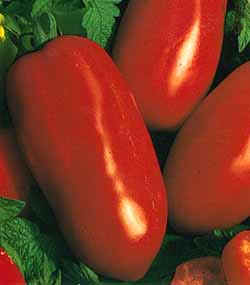
take a look at the famous san marzano, the type used in premium tomato sauces, and a few other varieties of italian tomatoes like the pachino and casalino.


& more about il pomodoro san marzano here.


fast & flexible tomato sauce

this is a basic pasta sauce which is not only flexible, it is downright simple and can be made quickly and with few ingredients. it can also be used right away or frozen for future use. it is something i always have on hand and know how it will taste each time i use it. i use it as a base for many recipes and can control both the texture and flavour of it — something i cannot do with a bottled sauce.


ingredients:

1 [28 oz] can diced tomatoes
1 [5.5 oz] can tomato paste
1/2 [28 oz] can water
2 - 4 tbsp good quality olive oil
1 - 2 tsp salt
1 - 3 tbsp sugar

1/2 c red [or white] wine*
1 1/2 tsp garlic powder*
1 1/2 tsp onion powder*
1/4 - 1/2 tsp crushed red chili pepper [flakes]*
1/2 tsp oregano*
1/4 tsp thyme*

*optional but good to include


method:

combine all ingredients* [see below] in a wide pan [to hasten evaporation & cooking] and bring to a boil over medium heat.

let boil gently for 10 minutes.

cover the pan partially so you do not have a tremendous splattering of tomato sauce everywhere.

lower heat to very low and simmer for 30 to 45 minutes until thickened. adjust seasonings to suit your taste and use right away or cool and freeze for future use.

*use a potato masher or process the tomatoes with either a food mill or food processor or blender slightly before adding if you do not want thick chunks of tomatoes [depending on the texture of your canned sauce].

notes:

* you can sauté onions and/or garlic and mushrooms to add to sauce if you like
* precooked ground beef can be put in the sauce or meatballs
* any vegetable cut in small dice can be added to fortify & personalize the sauce
* white wine can be used
* sugar is added to balance the acidity [i do not like acidic and rough sauces]
* olive oil is added to give depth to the sauce, you may omit it
* you can use a can of crushed tomatoes but the sauce will be thicker. add more liquid.

to use this as a pizza sauce, place in either a blender, food mill or processor and purée if you have not done so earlier.

basic marinara sauce

this is the basic, no-frills, tomato sauce which is a staple in any italian kitchen and often used as a building block for many dishes. it is said to have originated in naples [napoli] and was the sauce which was fed to the marinari, or sailors upon their returns. the following recipe is for a marinara in its simplest form.


image: coins

marinara sauce

ingredients:

1/4 c olive oil
4 cloves garlic, thinly sliced

1 [28 oz] can diced tomatoes
1/2 can water
6 large leaves of basil
1/2 tsp oregano
1 - 2 tsp salt
1/4 tsp black pepper

method:

in a pot, heat oil and cook sliced garlic til very, very lightly browned and oil is fragrant.

carefully add the can of tomatoes and crush them a bit with a spoon or a potato masher. add the water and stir.

rip the basil into shreds and add it along with the seasonings and spices.

cook the sauce, uncovered, for about 40 minutes, stirring on and off until reduced to the texture you prefer.